
Altitude training, Xmas overeating and cycling at McDonald's
Wod_science overview - Week 52 2021

How oxygen uptake determines mountaineering success
Reinhold Messner and Peter Habeler were some pretty extraordinary human beings. They were the first to climb the Mt. Everest (8849m) without supplemental oxygen. This was back in 1978. In the 50-60 years before their impressive feat, physiologists always doubted this would be possible without supplemental oxygen. Pretty cool way to prove science wrong if you ask us.
How did they do it? Why has it always been thought to be impossible from a physiologic point of view?
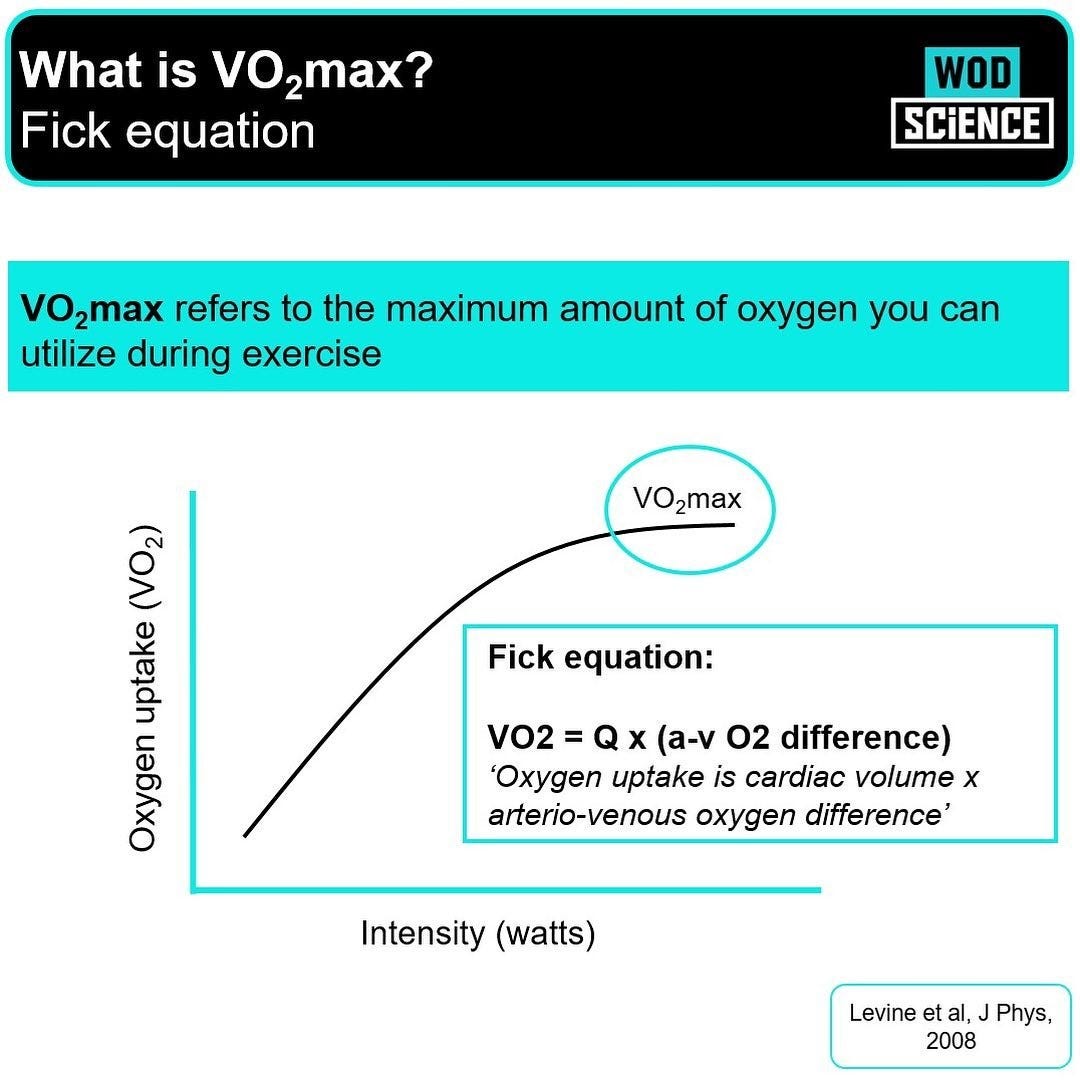
Let’s first look at one of the main parameters in exercise physiology: maximal oxygen uptake or ‘VO2max’. In normal conditions, VO2max increases linearly with exercise intensity until it reaches a plateau. This means, even when intensity continues to increase, the body is unable to take up even more oxygen. This plateau corresponds to the VO2max.
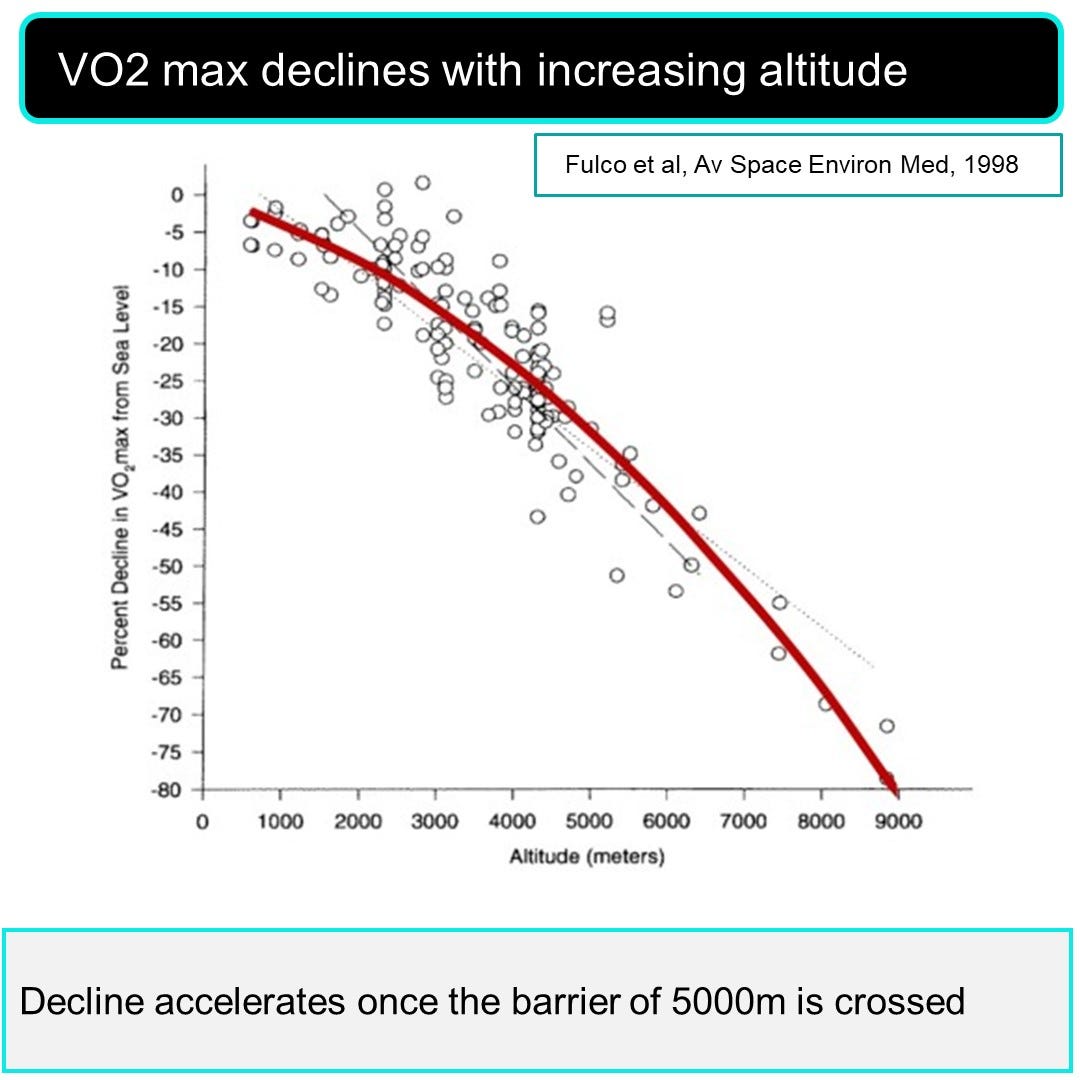
With increasing altitude, atmospheric pressure decreases, resulting in less oxygen molecules per volume of air that a person breathes in. Therefore, VO2 reduces almost linearly with increasing altitude. Interestingly, as can be observed from the figure below, all goes even more downhill once a person reaches an altitude of 5000m. Approximately the altitude of Everest base camp.
If you want to attempt to reach the top of an 8000+ summit, you better make sure you are quick. It is a beautiful, but devastating place to be.
Studies which have been simulating an ascent to the top of the Mt. Everest in the laboratory or studies that have actually monitored mountaineers ascending the Mt. Everest have estimated that a VO2max of at least 60 mlO2/kg is necessary to have approx. 20 mlO2/kg left, enough to slowly walk up the last 100 meters of the Everest.
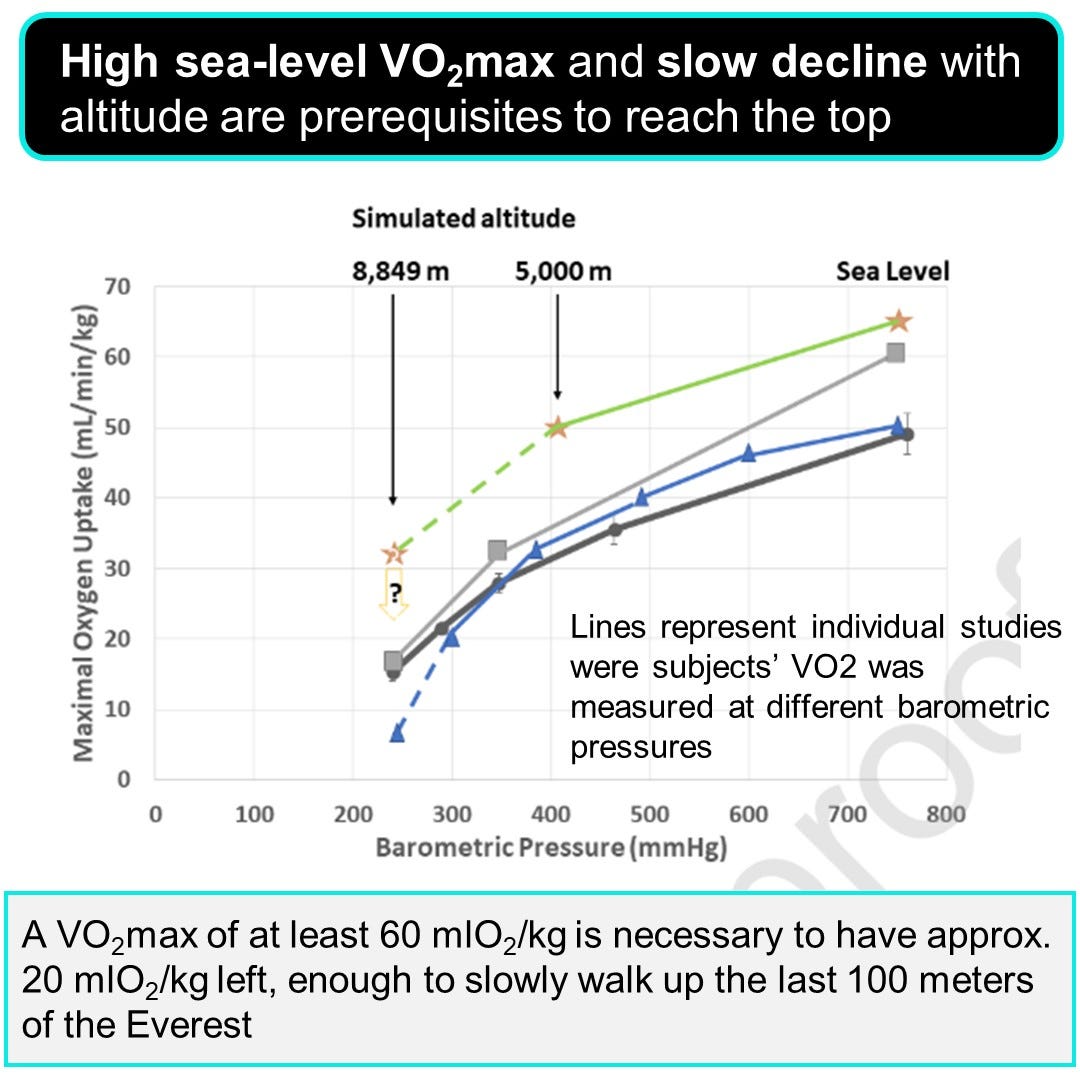
Another factor that is important for a successful ascent of the Everest is a VO2 max that decreases as slowly as possible with increasing altitude. Proper acclimatization, long-term training (mountaineering experience) and sufficient increase in minute ventilation to maintain arterial blood oxygenation are all important elements to achieve this.
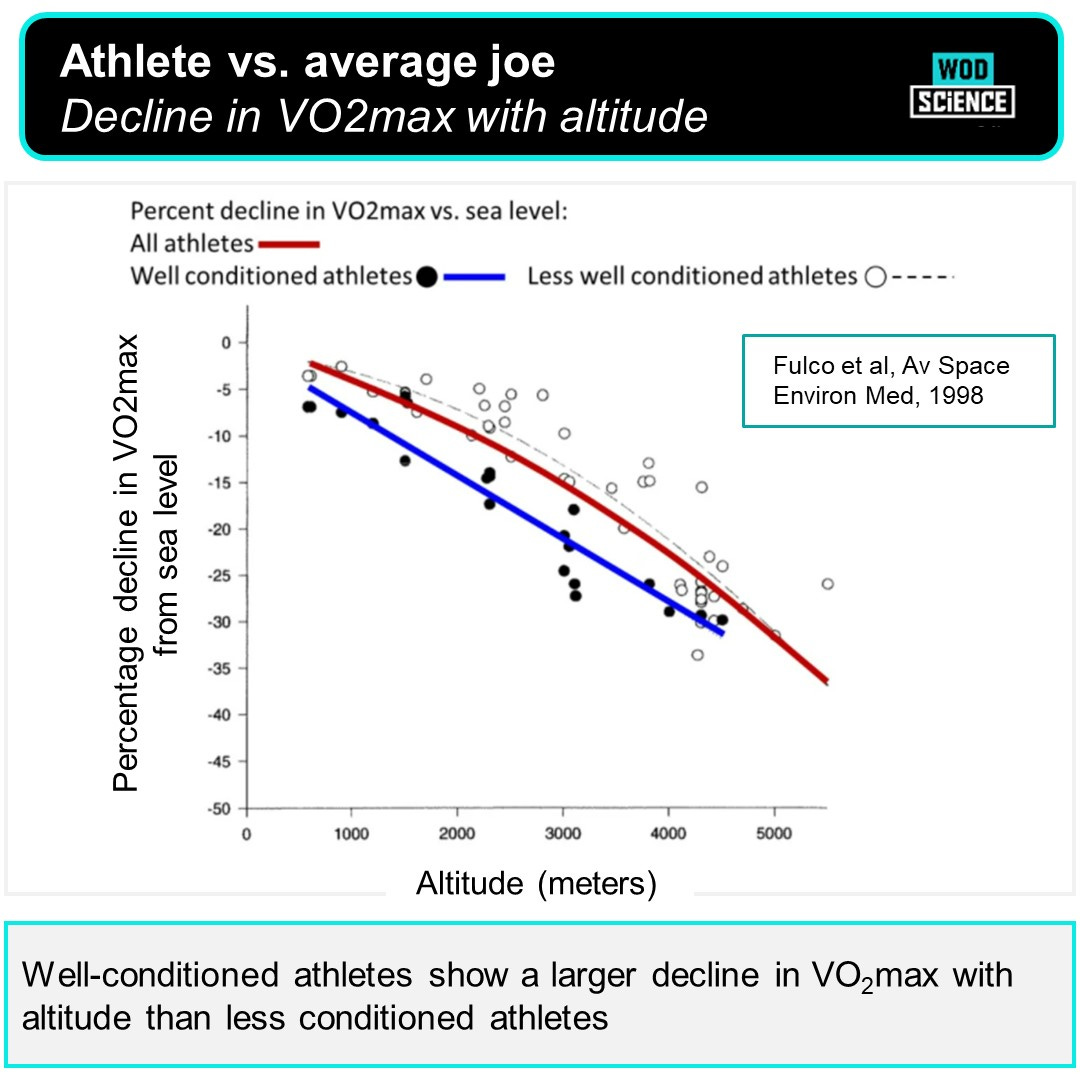
Cool fact, and maybe a bit paradoxically for some, athletes usually experience a faster decline in VO2max with altitude than sedentary people. Of course, well-conditioned athletes have a higher VO2max to begin with, so despite a larger decline when at altitude, their resulting VO2max is still higher than an average athlete.
Read more on this topic via two seperate wod_science posts (here and here). If you are interested in reading the research papers behind these posts, click here and here.
Can some daily exercise make-up for your Christmas indulgences?
In other words, can you outrun a bad diet? Well, it seems so. At least in the short term. Check the the results of one of our all-time favorite studies:
26 six active healthy men were randomly allocated to the following groups:
Group A (SUR): overconsumed 50% over their normal calorie intake and reduced step count to max 4000 steps
Group A (SUR + EX): overconsumed 50% calories as well, but were forced to run on a treadmill for 45min during the short (7day) study period
What happened? 7 days of overeating and reducing activity deteriorated heath; insulin response to 75g of glucose and other blood health markers all just went downhill, see figures and table below. Strikingly, just adding-in 45 min of exercise completely rescued this. All parameters were identical as baseline in the SUR + exercise group.
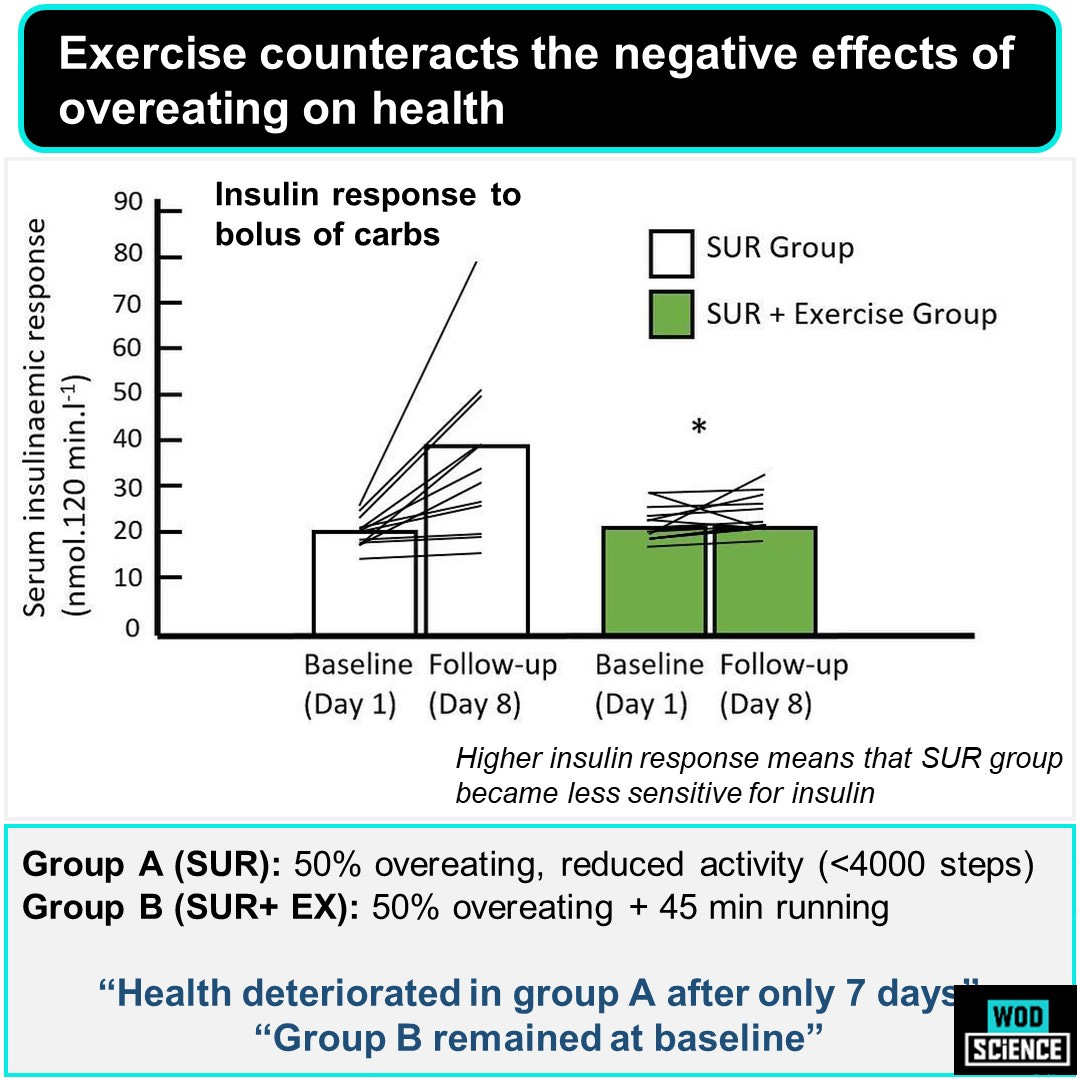
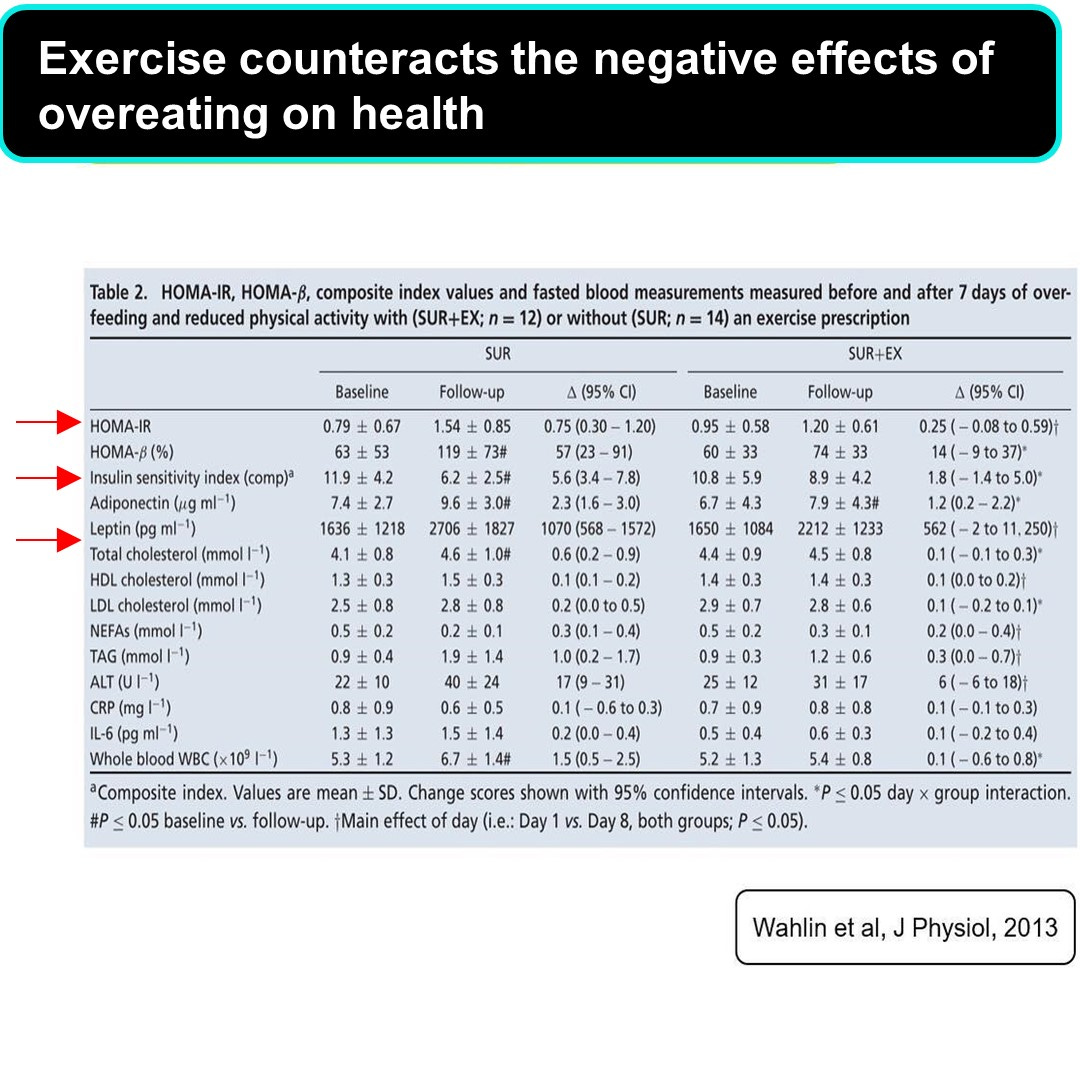
Exercise completely counteracted the negative effects of overeating on health
Take home. Enjoy your dinners but don’t forget to go out for a jog or a quick CrossFit® session. Read the full study here (it is a gem).
Some thoughts on McDonald’s introducing the exercise bike at their restaurants. Good move or virtue signaling?
Biking while eating a Big Mac, say whuuttt?

Question is, how long would a person need to bike to balance out a standard meal at McDo in terms of caloric expenditure. Let us dig into the numbers.
A standard McChicken menu with fries and diet Coke would be approximately 620 kcal. If we transfer this to an exercise setting, for instance on the Assault bike, this would correspond to 60 RPM (10kcal/min) or a solid 75-80 RPM (20 kcal/min) for 60 or 30 min respectively… Rough estimates of course.
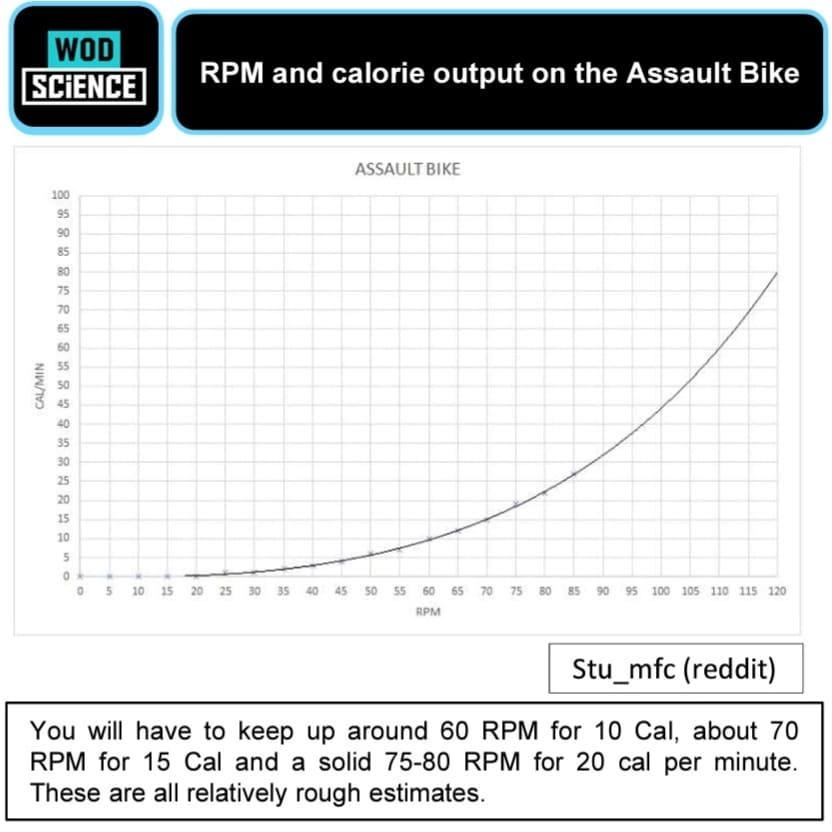
Check the Watts if you are more familiar with that parameter as a measure of intensity.
Yes, you guessed it, that is some hard work to burn off your hamburger 😊.
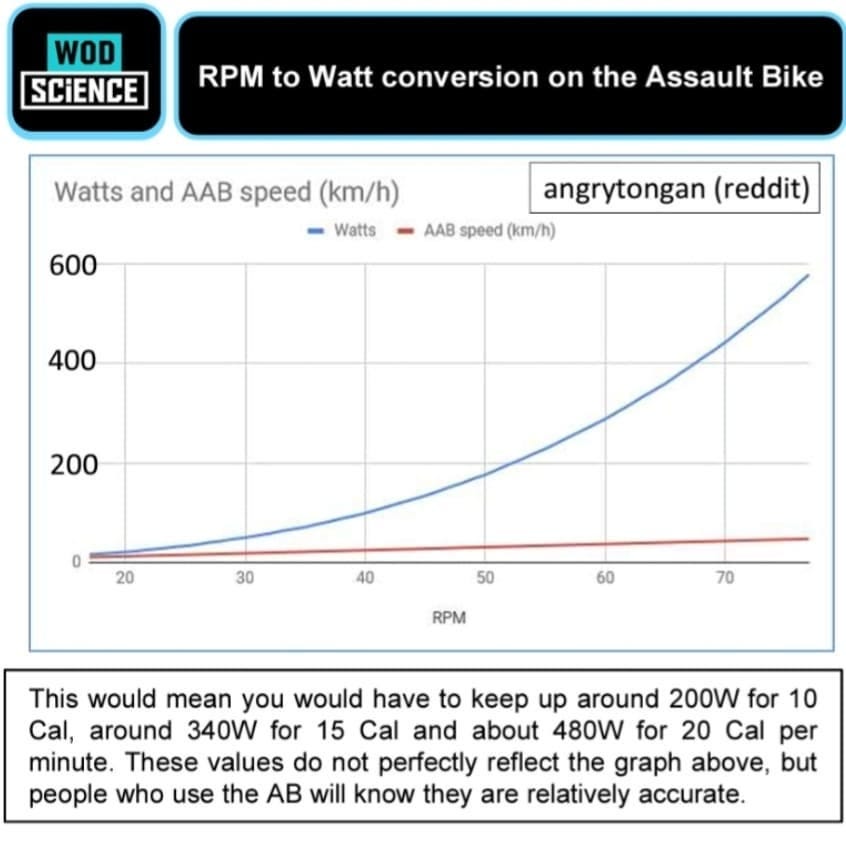
As a summary:
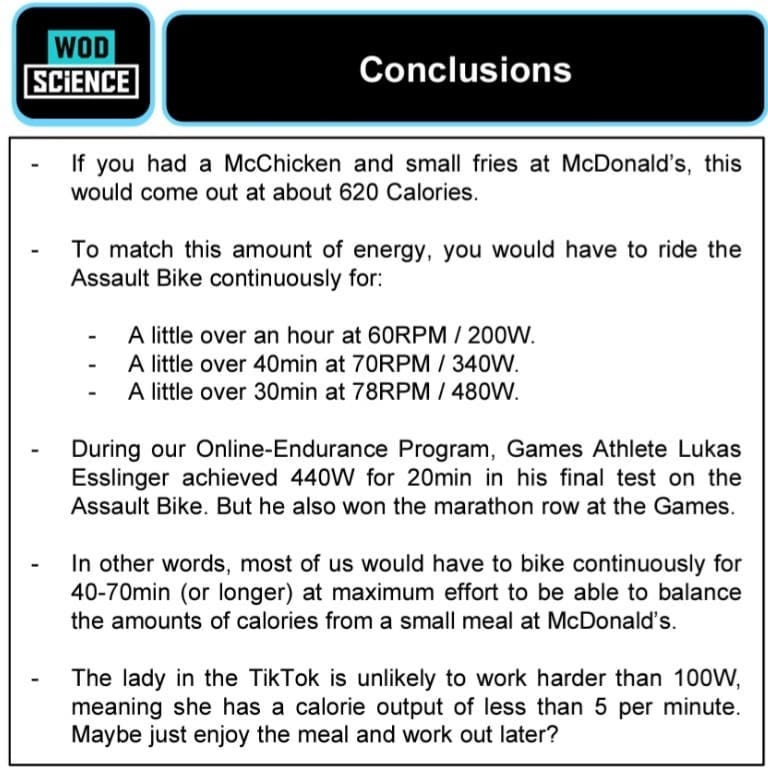
Is this exercise intervention from McDonald’s slightly missing the mark? Or is it a good move, your call.
** If you like this newsletter, please share with friends and family. The wod_science team will be very forever grateful.
CrossFit® is a registered trademark of CrossFit, LLC, which is not responsible for our blog