
Training programming tips, cheese and sex differences for muscle gains

Hi everyone,
Hope you started the week off well. In this week’s newsletter we got some interesting topics to cover.
Four time-efficient tips to get the most out of your strength training programming
Cheese as a valid post-workout meal (or is it supplement 😊)?
Ohhh controversy. Can women gain as much muscle mass and strength as men? In relative terms of course…
No time to lift? Four tips to maximize efficiency in the gym
Lifting weights is good for you. As a loyal follower of wod_science you probably knew that already. Nevertheless, lack of time remains the number one barrier for people to prioritize strength training. So how do you get the most out of your sessions in the least amount of time?
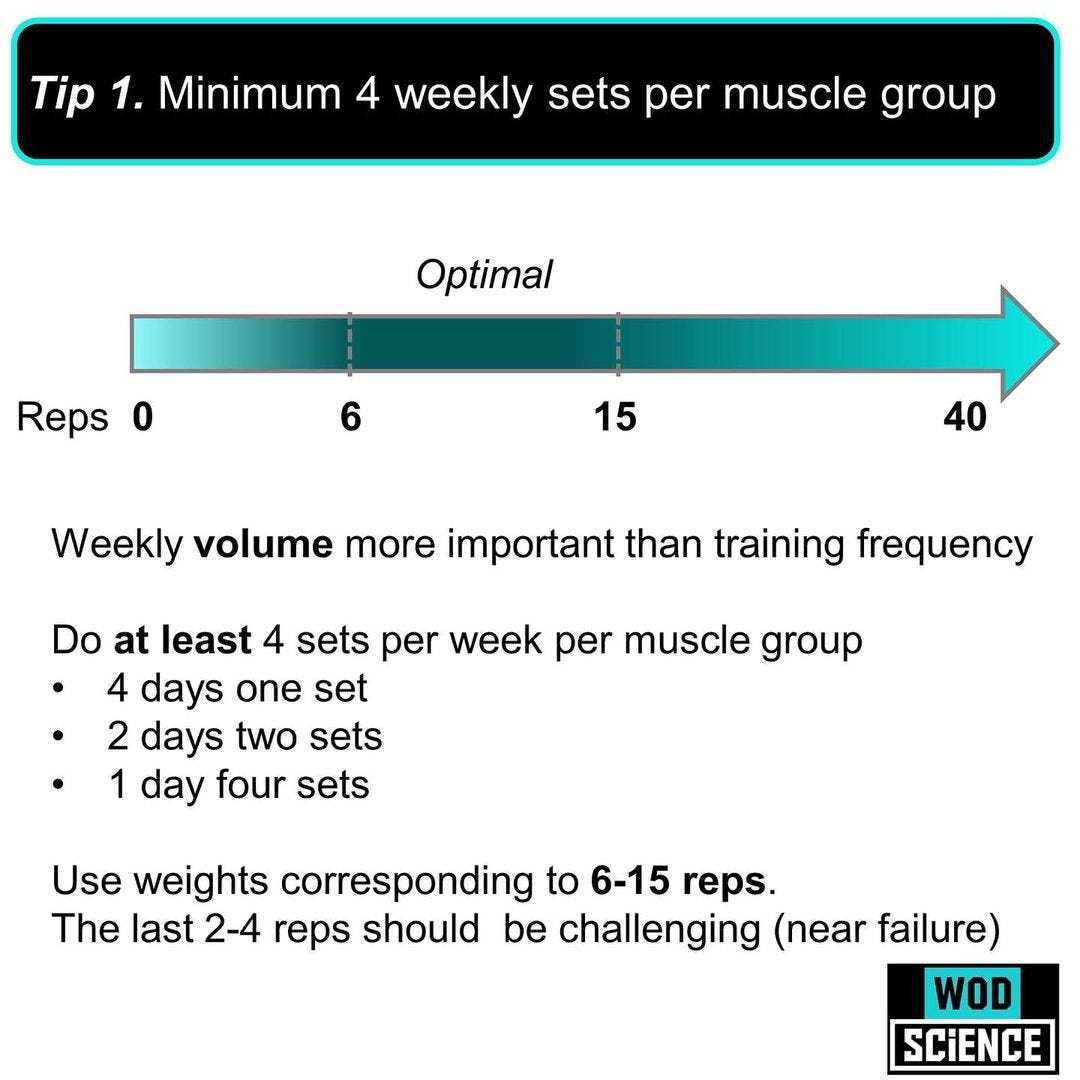
1. Weekly volume is more important than training frequency. With volume we mean the amount of reps x sets. Optimal is the range reps between 6 to 15, at least if muscle hypertrophy is the goal. Other rep ranges can also induce hypertrophy, but 2-4 sets in those rep ranges is the most time efficient. Imagine doing for instance 6 x 2. That would take much more time.
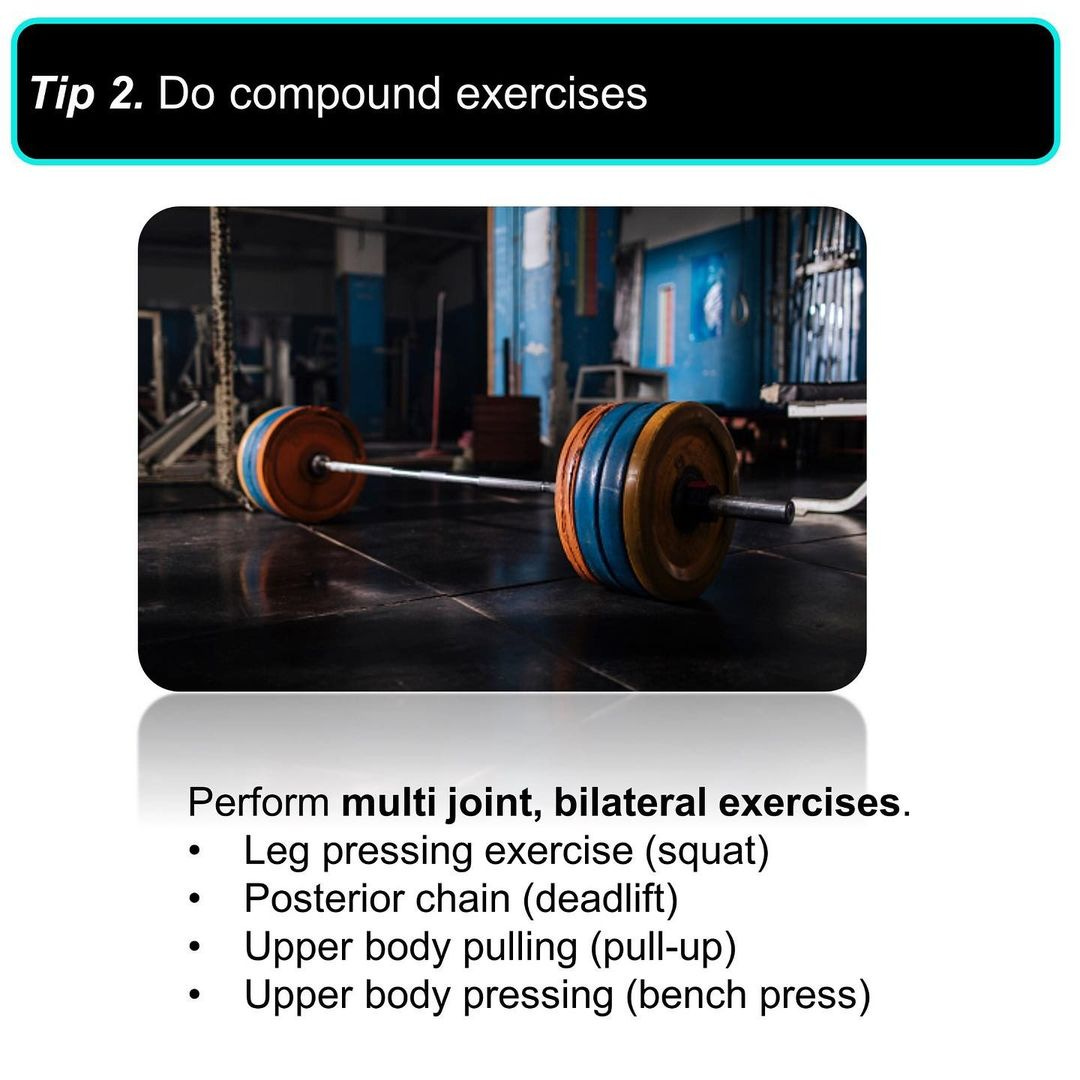
2. Do compound exercises. Hit many muscle groups in one lift. Standing in the mirror doing bicep curls might be good for the ego, but not so good for health of ALL muscles.
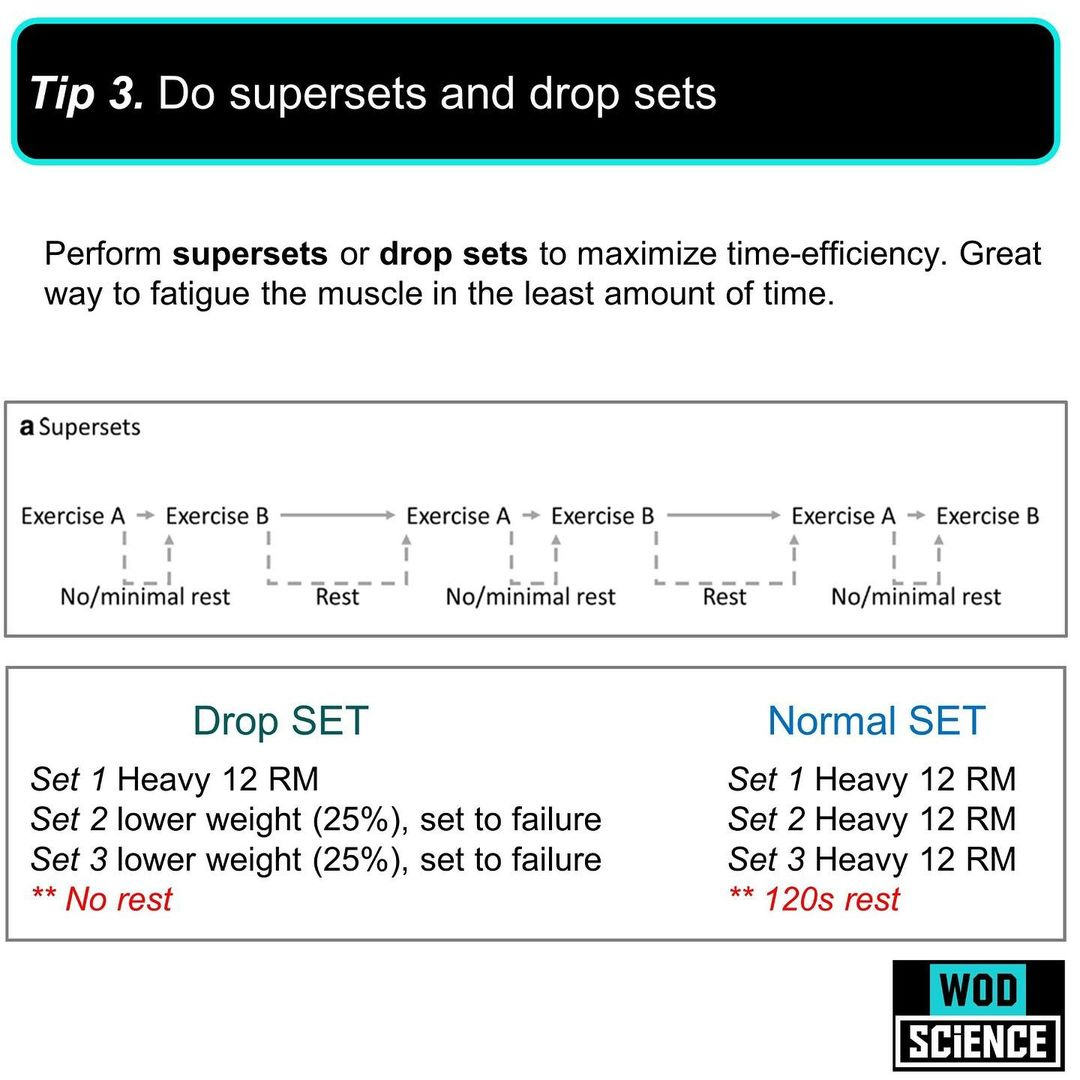
3. Play around with supersets or drop sets. These are great tools to maximally fatigue the muscle in the least amount of time.
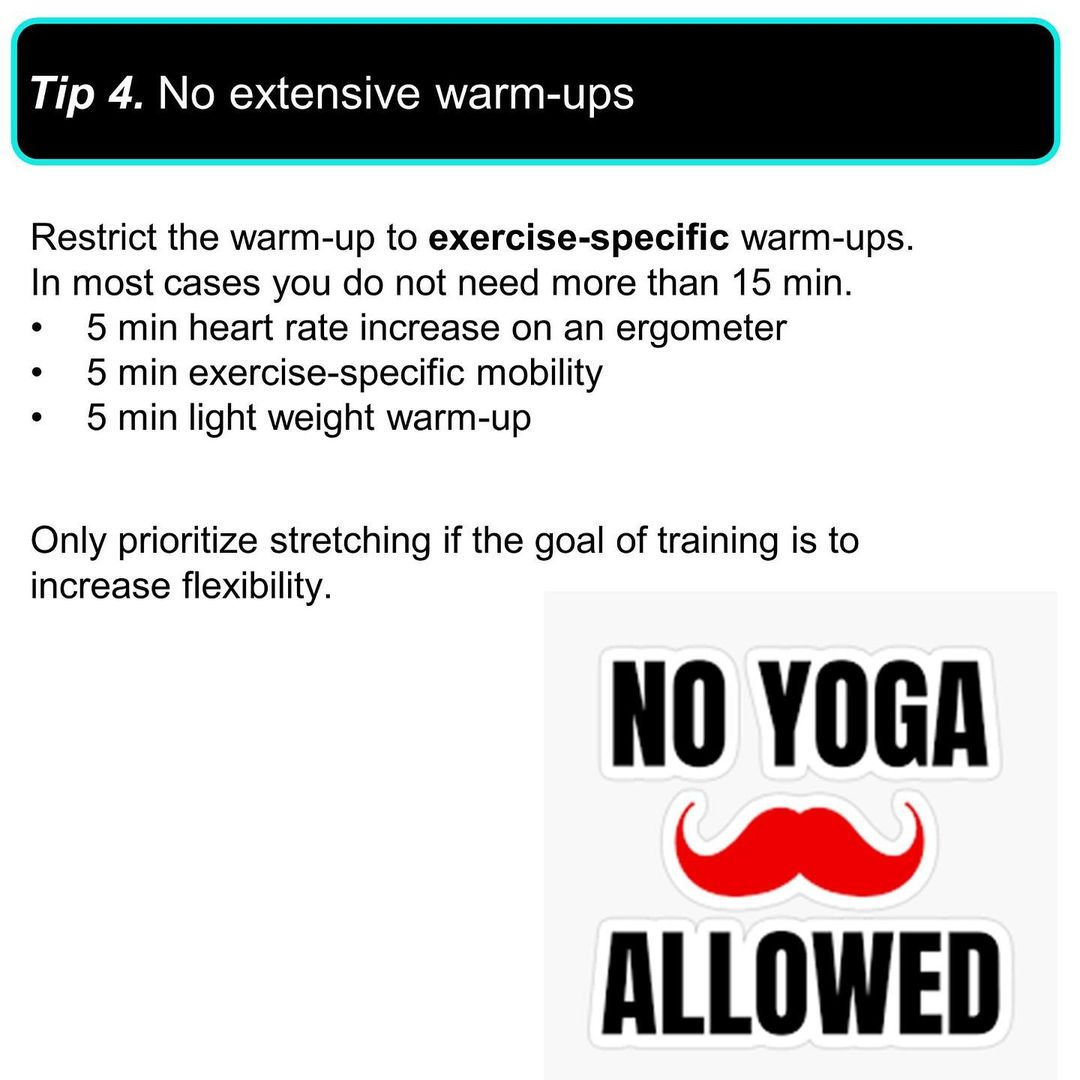
4. In contrast to what many coaches might argue. Do not spend too much time warming up. A 5 min general warm-up, 5 min of mobility for the exercise you will do (for instance squats will need more hip mobility than deadlifts) and 5 min light weight lifting will do the job perfectly fine. Do not spend 40 min mobilizing every joint if that is not the goal of the session.
5. Last but not least, although less evidence based. Leave your phone in the locker room. Focus on the lifting and resting in between sets.

Cheese as a good post-workout meal?
We all love cheese don’t we? But can it also be a good post-workout supplement? Can it help you recover from a lifting session? Well it might be, an it all has something to do with the food matrix.
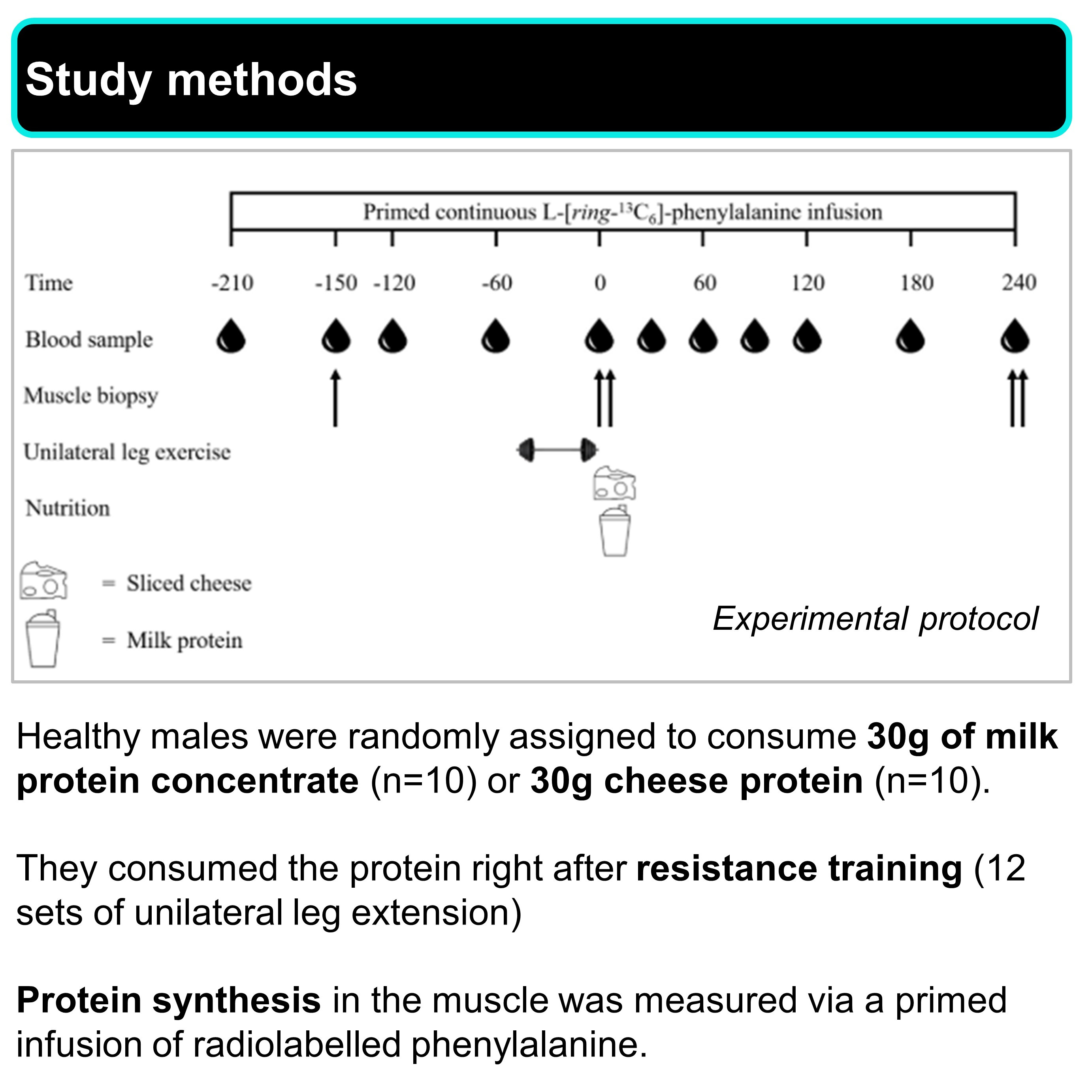
Take a look at the study set-up. A meticulously controlled RCT designed to assess the effects of cheese vs. milk on muscle protein synthesis after exercise.
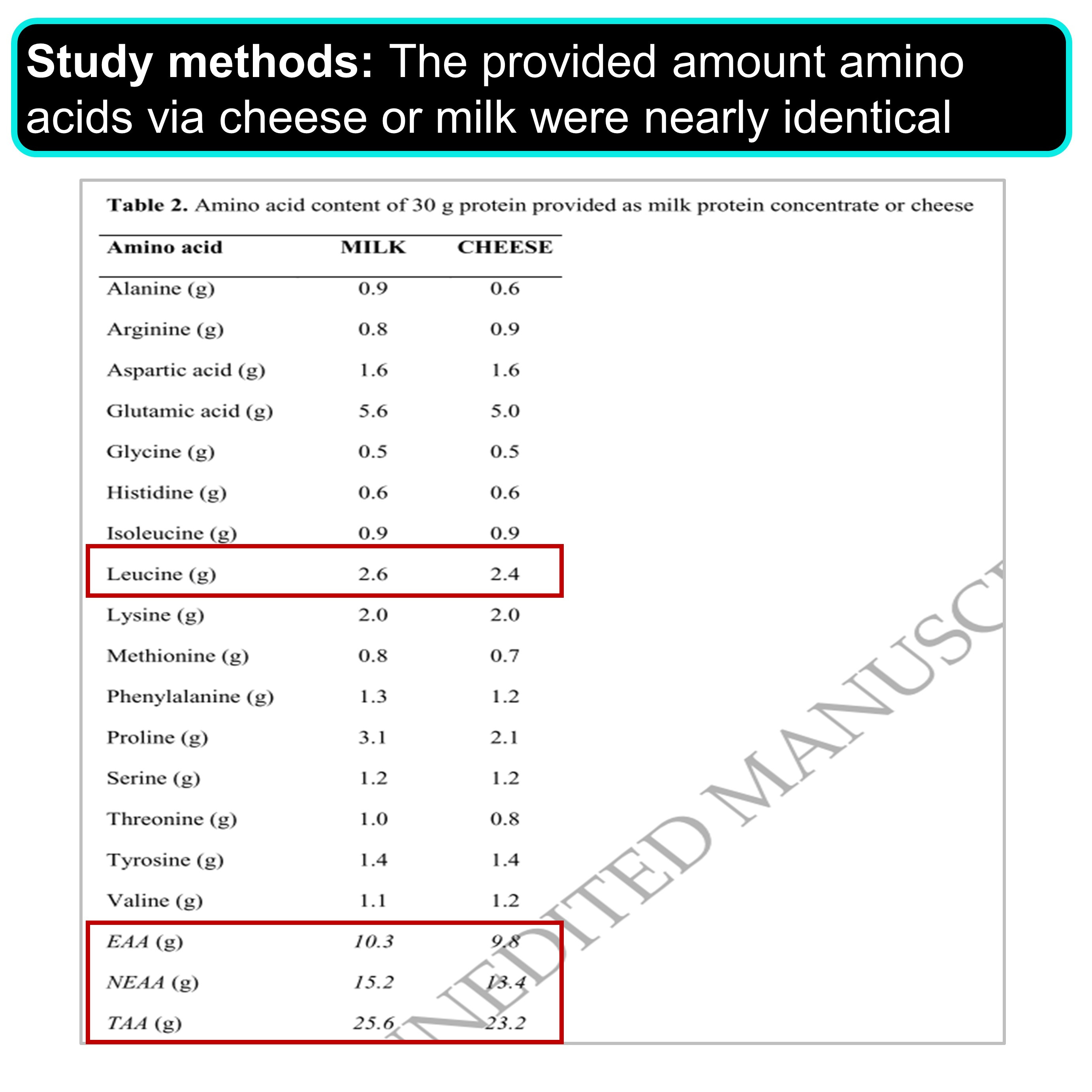
Both the milk and cheese supplement had a nearly identical amount of (essential) amino acids. Although not given here, the cheese obviously had more fat that the milk.
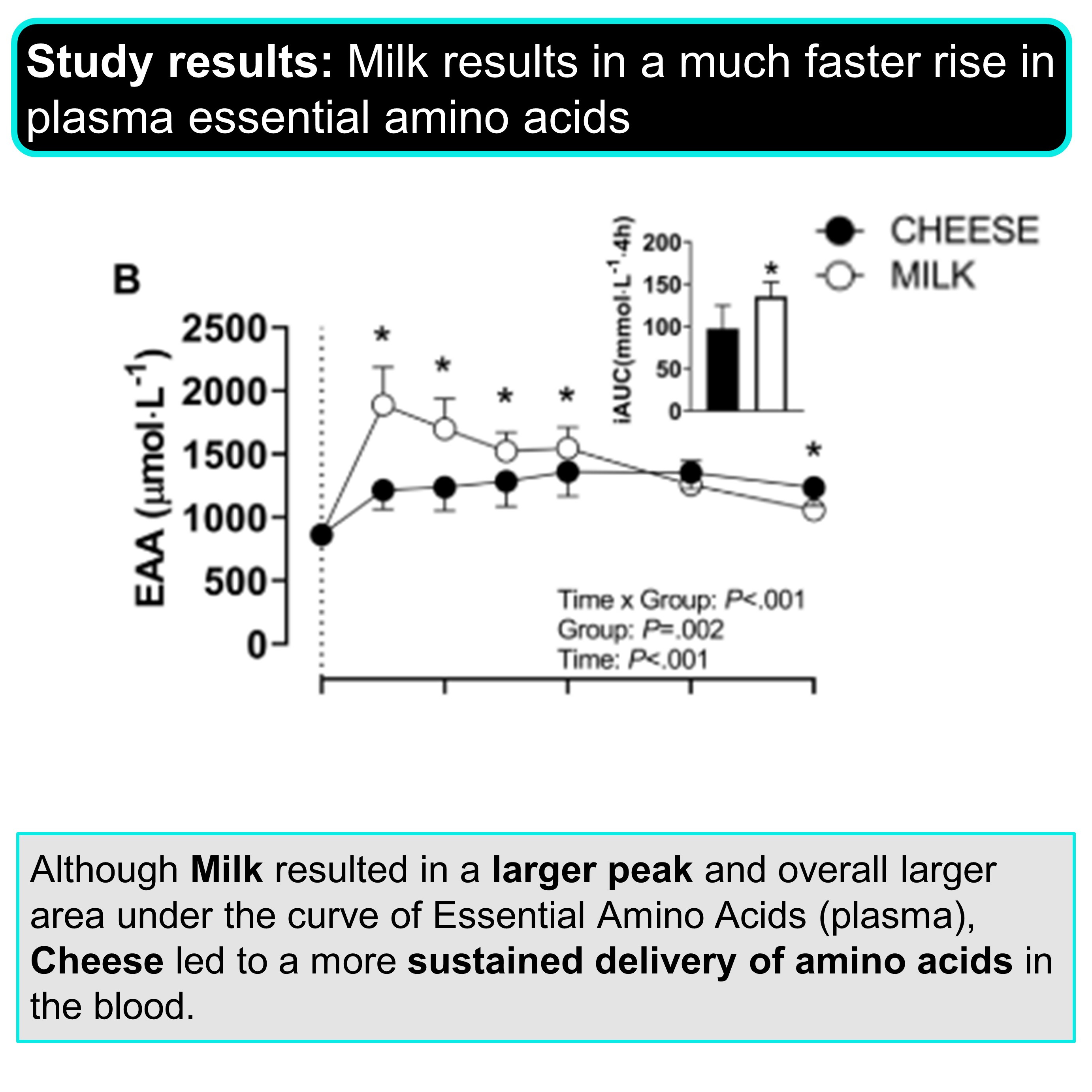
As expected, because milk isolates digest much faster, the amino acids in milk enter the bloodstream much faster. This means that the amino acids in milk have a higher amino acid availability than for instance the amino acids in cheese. EAA here means essential amino acids.
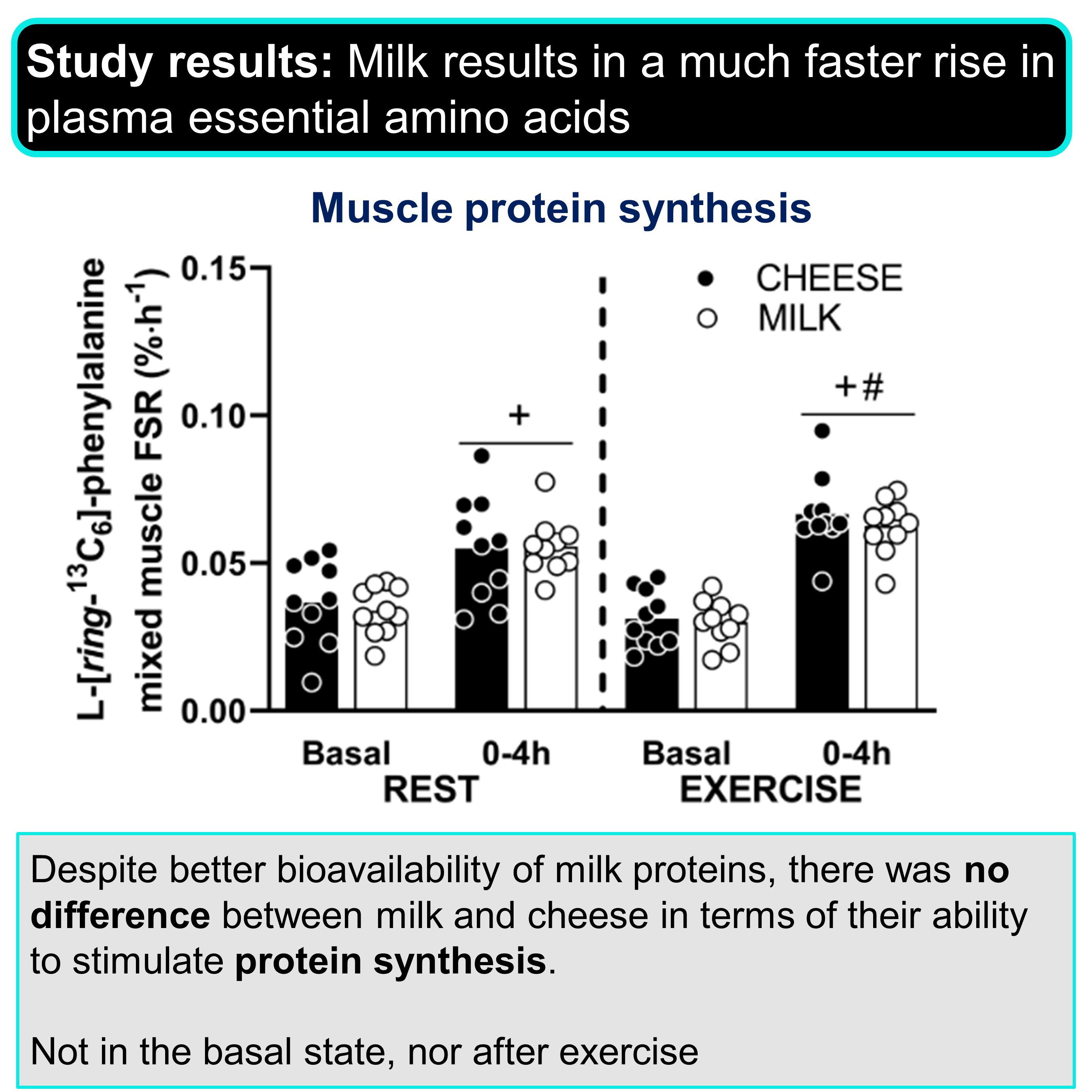
Interestingly, although more essential amino acids entered the blood (and presumably the muscle) faster with milk compared to cheese, the protein synthesis response after both supplements was identical. Both in the resting leg and the exercised leg. The authors explain that this is because next the to bioavailability of amino acids, also the food matrix of proteins has an influence on muscle protein synthesis. The food matrix is basically the physical domain that contains and/or interacts with specific constituents of a food.
So the question remains, is cheese your go-to supplement after training from now on? Well, probably not due to its high caloric content (much more fat than whey or milk), but it can be used as part of a larger meal in the evening (or lunch) in the hours after a hard workout. Because the amino acids in cheese digest much slower, it is still advisable to ingest a fast-acting whey shake when you are competing or doing several workouts on one day.
Sex differences for muscle growth and strength gains
On thing that CrossFit® has done amazingly well, in our opinion, is empowering women to lift weights. CrossFit®, and other strength sports have shown us that women can gain a large amount of muscle mass, but can they gain the same as men (in relative terms).
Answer is yes, check this study. Men has higher baseline muscle mass, but the change through training was the same for both men and women. This is true for both cross-sectional area and raw strength.
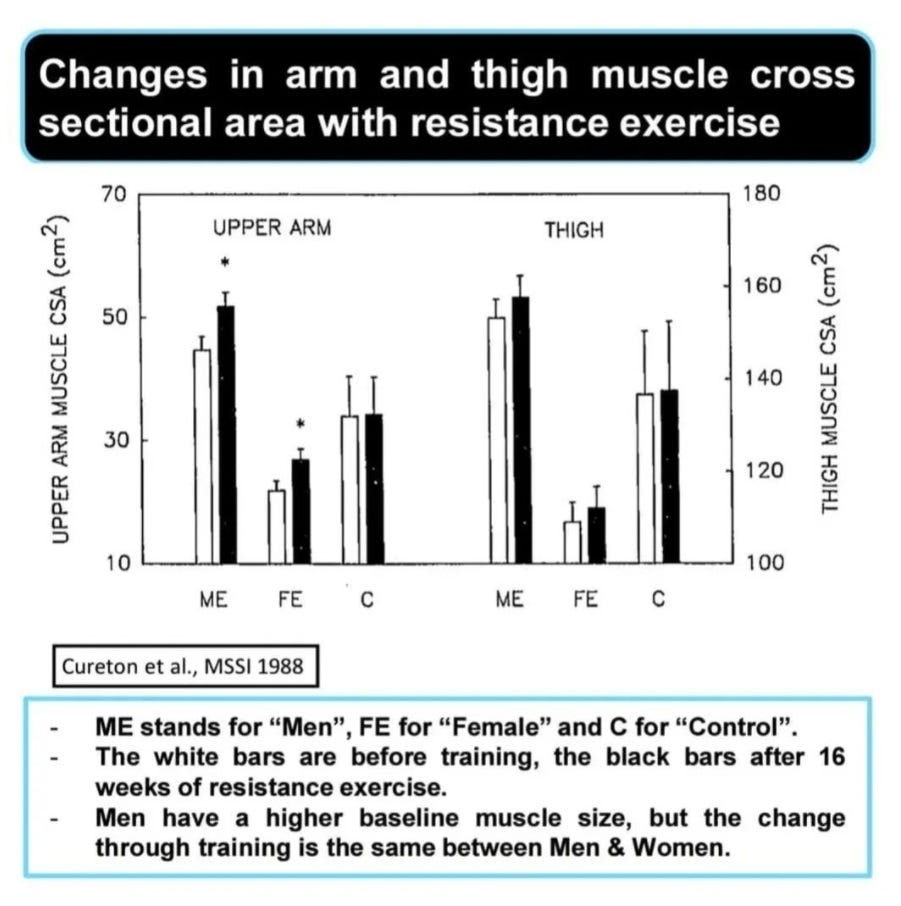
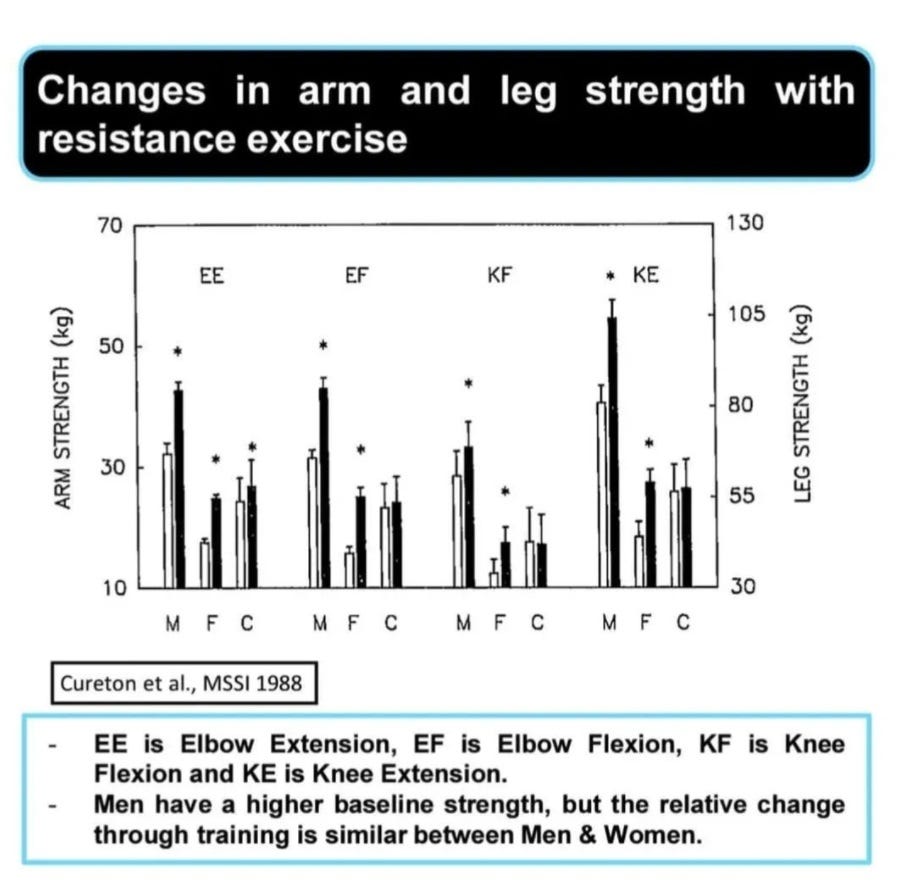
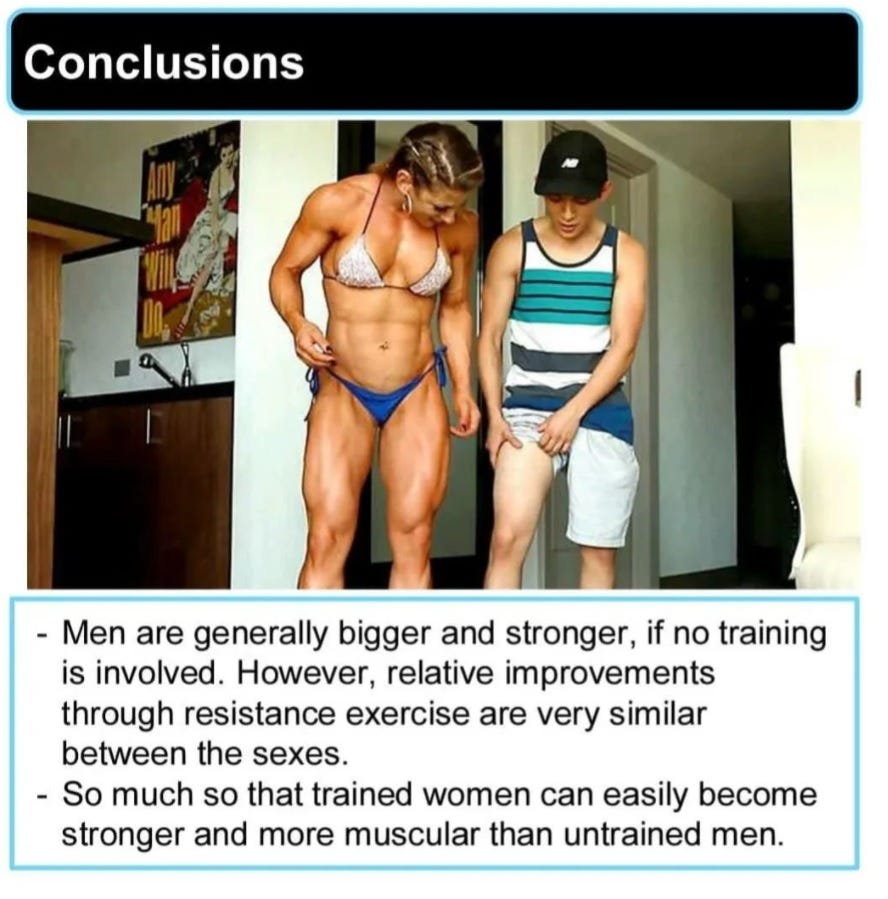
To sum it up (love this picture by the way):
Allright. That was it. I hope you liked the more detailed explanation on some of our posts. Please feel free to give this post a like as share it with interested friends.
Cheers, wod_science
CrossFit® is a registered trademark of CrossFit, LLC, which is not responsible for our blog